

EXC2 and EXC3 are designations that frequently appear in steel construction projects – but for many investors, they remain unclear. Meanwhile, choosing the appropriate execution class has a real impact on construction quality, building safety, the scope of inspection, and… the cost of the entire investment.
Importantly, it's not just the designer or contractor who decides on the EXC class. In practice, this is an element that should be consciously approved by the investor – that is, by you. Therefore, it's worth knowing the differences between EXC2 and EXC3, when a given class makes sense, and what to look out for before signing the contract.
What are EXC classes in steel structures?
EXC (Execution Class) classes are levels of structural steelwork performance requirements specified in the standard EN 1090-2In practice, they indicate how strict the production, inspection, and documentation processes for a given structure must be.
For an investor this means one thing: the EXC class directly affects the quality of execution, the scope of supervision, the requirements for the contractor, and the cost of implementation. The higher the class, the greater the requirements – but also greater responsibility and structural safety.
What does EXC2 and EXC3 and EXC1 and EXC4 mean?
The standard distinguishes between four classes of execution:
- EXC1 – the lowest grade, used in simple constructions of little importance (e.g. small auxiliary elements),
- EXC2 – standard class for most steel constructions, such as warehouse halls, commercial or typical industrial facilities,
- EXC3 – higher class for structures of greater significance and higher requirements, e.g. industrial, energy or infrastructure facilities,
- EXC4 – the highest class, used in structures of particular importance for safety, such as special facilities or critical infrastructure.
The differences between these classes include:
- quality control and research scope,
- requirements for welders and welding procedures,
- accuracy of execution
- documentation and supervision levels.
In practice, the most common classes are EXC2 and EXC3which is why they are the focus of most investment decisions.
Where did the EXC classes come from?
EXC classes were introduced as part of the European harmonisation system to standardise the requirements for the execution of steel structures across the European Union.
They are directly linked to:
- Eurocodes (PN-EN 1990–1999) – which define the principles of structural design
- and the norm EN 1090-2 – which defines how they are performed.
This makes the design and execution of the structure consistent: Eurocodes specify the requirements the structure must meet, and PN-EN 1090-2 indicates how it should be executed to meet these requirements.
The choice of the EXC class depends on.
The choice of an EXC class is not random – it should stem from an analysis of the design, the operating conditions of the structure, and the consequences of its potential failure. Although the decision formally appears in the design documentation, from the investor's perspective, it is worthwhile to understand what influences it and why.
Structural purpose
The first and primary factor is what the construction will be used for:
- Warehouses and commercial buildings – in most cases, they qualify for the EXC2 class,
- Commercial and service properties – also most often EXC2, unless there are specific requirements,
- Industrial infrastructure and facilities – often require EXC3 due to greater responsibility and the importance of the structure.
The greater the importance of an object to the company's functioning or user safety, the higher the requirements for its implementation.
Loads and working conditions
The second key element is the loads that the structure will be subjected to, and the environment in which it will operate:
- static loads (e.g. standard use of hall) – usually EXC2,
- dynamic loads (vibrations, variable loads, intensive operation) – often require EXC3.
Additionally, environmental conditions are significant:
- the action of wind and snow
- variable temperatures
- Aggressive environment (e.g. industrial).
The harsher the working conditions for a structure, the greater the demands on the quality of its construction.
Consequences of failure
A very important, and often underestimated, factor is what
- Low consequences (e.g. limited risk objects) – most often EXC2,
- serious consequences (threat to people, business continuity, infrastructure) – EXC3.
This approach directly follows from the Eurocodes, which classify objects partly based on the consequences of their potential damage.
Project and investor requirements
The final decision regarding the EXC class should stem from the structural design:
- Designer determines the performance class based on calculations, standards, and the intended use of the object,
- investor approves this solution and bears responsibility for its choice.
That is why it is so important not to treat the EXC class as a formality. It is an element that affects the entire implementation process – from contractor selection, through quality control, to final acceptance of the structure.
How does the EXC class affect the execution of a steel structure?
The EXC class has a direct impact on the entire steel construction process – from material preparation, through welding, to the final acceptance. For the investor, this means differences not only in quality but also in the scope of control, documentation, and contractor responsibility.
The most important areas affected by class EXC are:
- weld quality In higher classes (EXC3), more stringent welding procedures apply, and the welds themselves must meet higher quality requirements.
- Execution control – w EXC3 the control is more extensive, it covers more stages of production and often requires additional supervision,
- number of NDT inspections – in EXC2, tests are limited and often sporadic, whereas in EXC3, a greater percentage of welds are subject to detailed inspection (e.g., ultrasonic or radiographic testing),
- Accuracy of execution and tolerances – in higher classes, acceptable deviations are smaller, which translates into greater precision of construction,
- As-built documentation – EXC3 requires significantly more extensive documentation, including research reports, quality control records, and a full execution history,
- material traceability – w EXC3 it is possible to trace which batch of material was used to produce a specific component and how its production process progressed,
- Staff qualifications – higher welder competencies and supervision by a welding engineer are required for higher classes,
- Contractor's liability – the higher the EXC class, the greater the responsibility for the quality of work and compliance with standards.
In practice, this means that The same hall made in EXC2 and EXC3 can look very similarbut the process of its execution will be completely different. More time and resources are devoted to control, documentation, and quality assurance, which is crucial in more demanding projects.
From an investor's perspective, the most important thing is that the EXC class does not just concern "technicalities" but realistically impacts the safety of the construction, the course of implementation, and the final quality of the entire investment.
EXC2 vs EXC3 – key differences
The differences between EXC2 and EXC3 are not just about "greater requirements." In practice, they mean a different approach to production, quality control, and documentation of the entire process. It is these elements that affect the safety of the construction, but also the cost and the choice of contractor.
Below you will find a detailed comparison from an investor's perspective:
| Element | EXC2 | EXC3 |
| Typical use | Warehouse halls, commercial halls, standard industrial facilities | Heavy industrial construction, power generation, infrastructure (e.g. bridges, process plants) |
| Consequence class (Eurocodes) | Normally CC2 (medium failure effects) | usually CC3 (high impact failure) |
| Quality control | Basic production and assembly control | enhanced control, increased supervision and more frequent interim inspections |
| Non-destructive testing of welds | limited scope of research (e.g. randomised controlled trials) | wider range of non-destructive testing (RT, UT, MT) – higher percentage of welds subject to inspection |
| Welding | standard operating procedures (SOPs), reduced requirements | approved procedures (WPQR), increased requirements for welders and welding supervision |
| Staff | Standard qualifications | higher qualifications, often requiring the supervision of a welding engineer (IWE/IWT) |
| Manufacturing tolerances | Standard permissible deviations | more stringent tolerances and manufacturing precision |
| Material traceability | basic (e.g. material parties) | full traceability – the ability to trace the material and execution of an element |
| Documentation | limited as-built documentation | extensive documentation (protocols, research reports, quality control records) |
| Construction supervision | Standard | often greater supervision and acceptance |
| Cost of execution | lower | higher (more work, control, and documentation) |
| Artist availability | broad – most companies have EXC2 | Limited – only companies with appropriate certification and backing |
How to choose the right EXC class for your investment?
The selection of the EXC class should stem from the actual project requirements, rather than being an arbitrary decision or an attempt at "savings" or "spare upgrading." A step-by-step approach, based on collaboration between the designer and the contractor, yields the best results.
In practice, it's worth going through a few stages:
- Project analysis – this is the starting point; the design documentation specifies the loads, purpose, and requirements which affect the EXC class,
- consultation with a designer – he is responsible for selecting the class in accordance with Eurocodes and the PN-EN 1090-2 standard,
- Speaking with a contractor - allows you to check if a given EXC class is practically feasible and if the company has the appropriate competencies,
- Checking standards and requirements – particularly in more demanding investments, it is worth ensuring that the adopted class is consistent with the object's intended use and its significance.
Finally, it is worth asking yourself a few simple questions:
- What will be structural loads Standardowe czy wymagające?
- what are consequences of a potential failure?
- What is object application and its significance for business or users?
If the answers indicate standard usage – EXC2 is usually sufficient. However, if the construction is more significant, operates in difficult conditions, or is responsible for safety – then choosing EXC3 is justified.
What to look out for when choosing a steel structure contractor
The choice of contractor is crucial – even the best-suited EXC class is meaningless if the company is unable to implement it correctly.
When choosing, it's worth paying attention to a few specific elements:
- Does it have EN 1090 certification? – this is the basis for admission to the performance of steel structures,
- Does it work in the required EXC (EXC2 / EXC3) class? – not every company has rights to higher classes, especially EXC3,
- Does it have implemented welding procedures (WPS, WPQR)? – key for quality and repeatability of execution,
- Does it provide full as-built documentation? – particularly important for EXC3 and investment acceptances.
In practice, this means that not every contractor will be suitable for every project. Companies carrying out more demanding constructions – for example, for industry, energy, or infrastructure – must meet higher standards and possess the appropriate technical and organisational resources.
Therefore, instead of focusing solely on price, it is worth checking whether the contractor actually has experience in carrying out constructions of the required quality level and whether they are prepared to work in the given EXC class.
EXC2 and EXC3 in practice – examples of applications in ON-Time Solutions projects
The best way to understand the differences between EXC2 and EXC3 is to look at real-world projects. In practice, it's not that the construction itself "looks different". It's its significance, loads, and technical requirements that determine the execution class.
ON-Time Solutions is authorised to work in EXC3 class, allowing us to undertake more demanding projects. – particularly in the area of medium and heavy steel structuressuch as industrial installations, energetic, infrastructure or technological facilities, e.g. cement plants.
Below you will find examples of implementations that clearly show where EXC2 and EXC3 are most often used.
Warehouse and service building (Norway) – typical example EXC2
- Industry: warehouse and service facility
- Scope of work: Steel structure production
- Characteristics standard loads, utility function
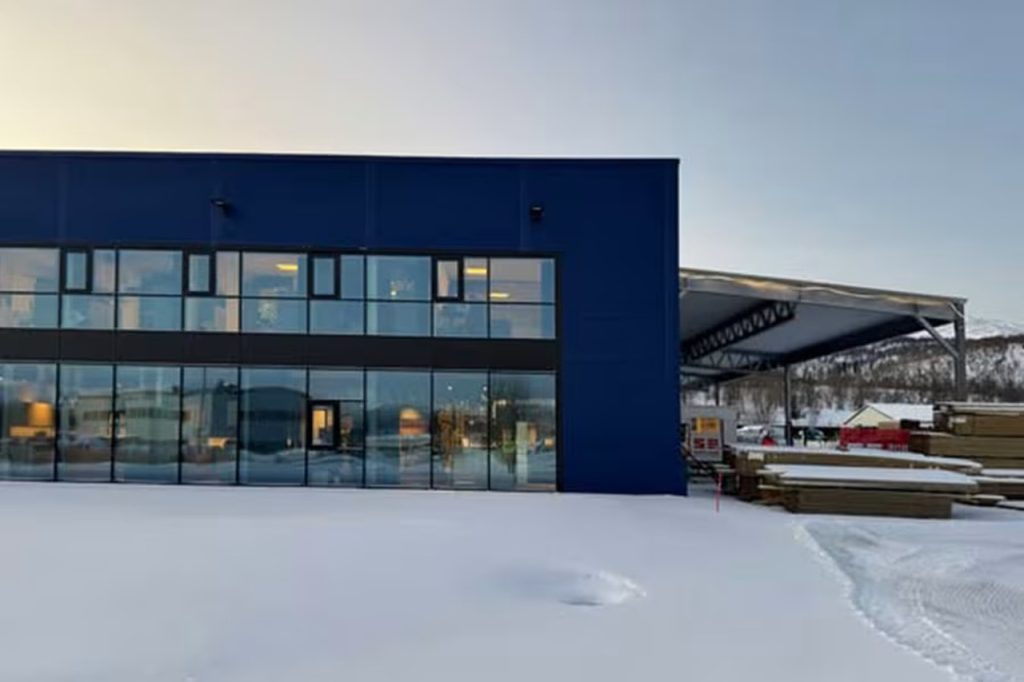
These types of objects are most often implemented in the class EXC2because:
- have predictable working conditions,
- are not a critical infrastructure element
- The breakdown does not pose a high risk to the environment.
This is a classic example of a build where EXC2 is fully sufficient and cost-optimal.
Footbridge (Poland) – EXC2 / EXC3 border
- Industry: Road and pedestrian construction
- Scope of work: Design and manufacturing
- Characteristics Public building, user loads
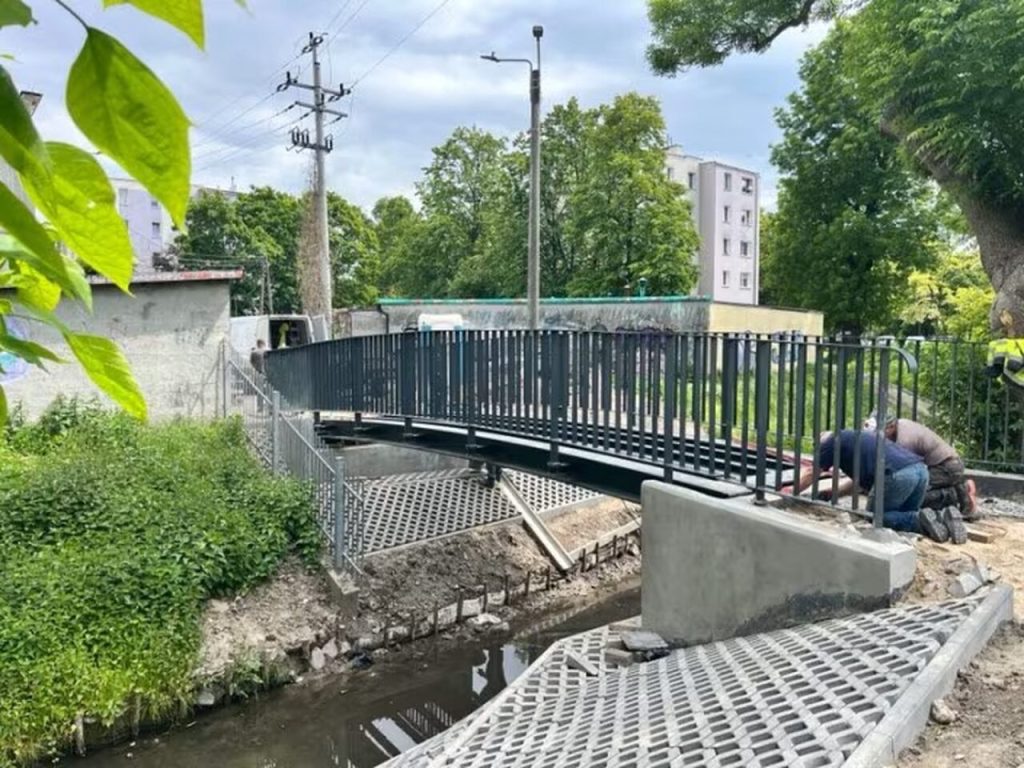
For such constructions, the decision depends on the project:
- with simpler bridges it is possible EXC2
- for larger loads or object significance – EXC3
In this case, EXC2 was used.
Here it is crucial user safety, therefore a higher standard of workmanship is sometimes also used.
Industrial construction (France - building sector) – EXC2 / EXC3
- Industry: construction industry
- Scope of work: Projekt i produkcja
- Characteristics element of a larger industrial system
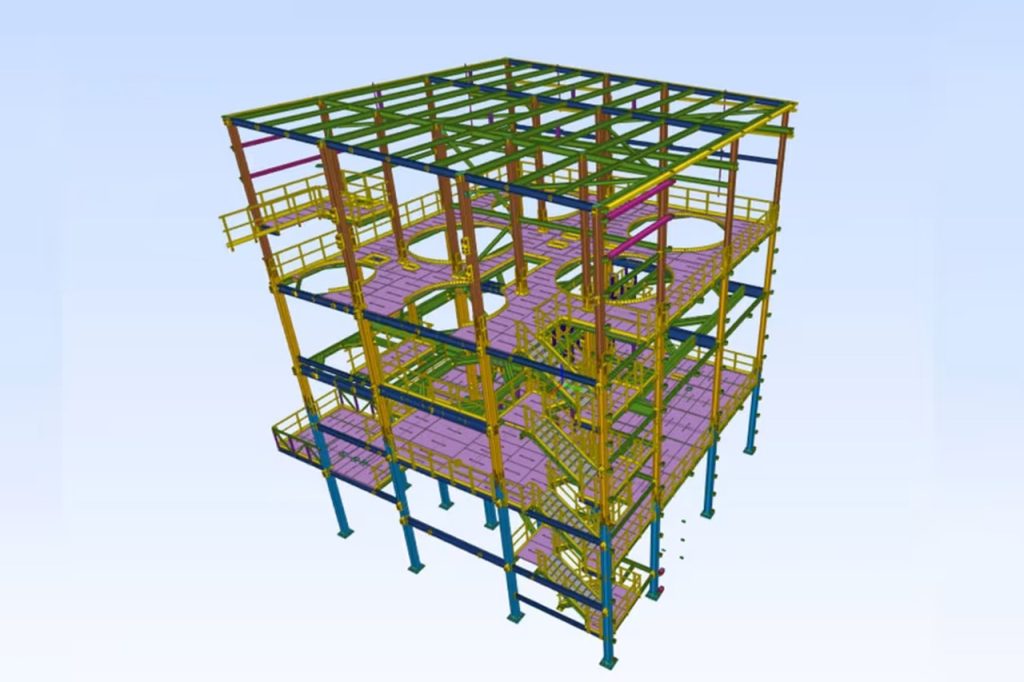
In such implementations, the EXC class depends on:
- construction functions
- burdens
- Meanings for the whole object.
Some components can be made in EXC2, and more critical ones – in EXC3.
In this case, EXC2 was applied with some requirements of EXC3.
Construction for the water treatment sector (Austria) – typical EXC3
- Industry: Environmental industry / infrastructure
- Scope of work: Projekt i produkcja
- Characteristics Technological installation, demanding environment
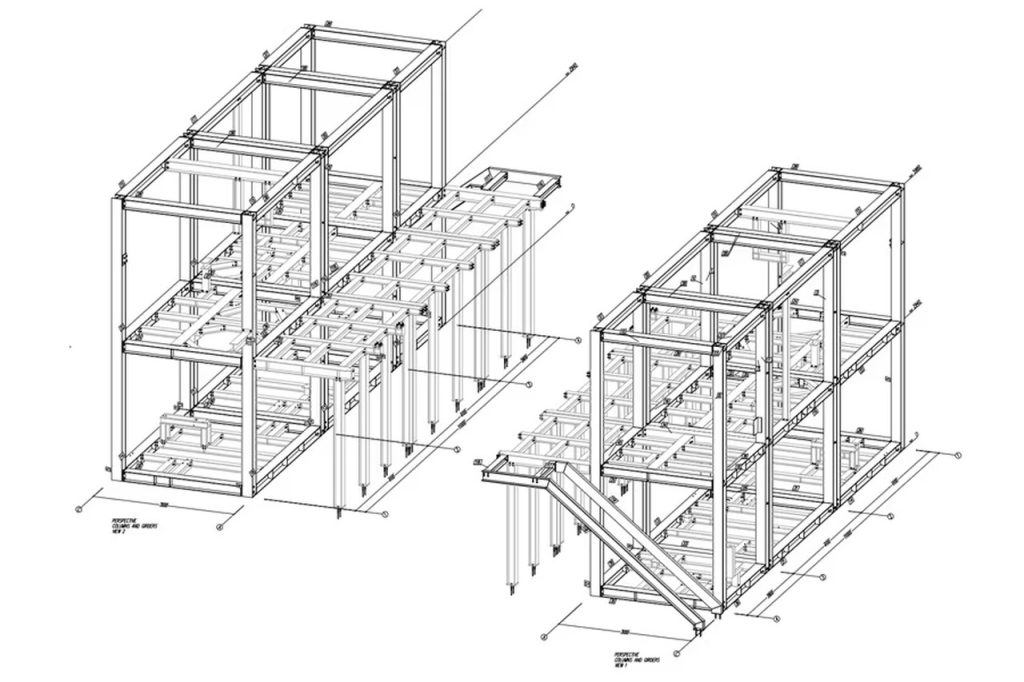
This is an example of a construction where it is often used EXC3because:
- I work in demanding environmental conditions,
- jest częścią infrastruktury technicznej
- must ensure high reliability.
Construction for the chemical sector (France) – EXC3
- Industry: chemical industry
- Scope of work: Projekt i produkcja
- Characteristics high technological and security requirements
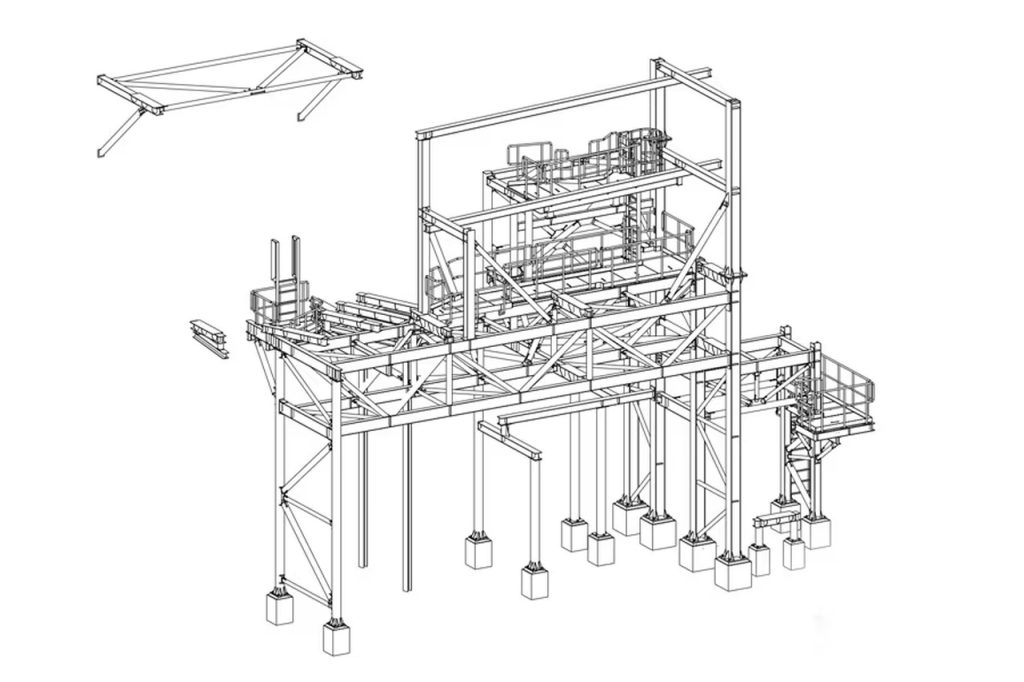
In this type of implementation, EXC3 is the standard because:
- The structure operates in an aggressive environment.
- High security requirements apply
- A possible failure could have serious consequences
What's worth remembering before choosing an EXC2 or EXC3 class?
As the examples show, the choice of EXC class is not simply a matter of "hall or no hall". The key factors are the real working conditions of the structure, its importance to the investment, and the level of responsibility involved.
In practice, this means that:
- standard business objects are most often realised in the EXC2 class
- more demanding constructions – particularly industrial, infrastructural and technological ones – often require EXC3
- The most important thing is to match the execution class to the project, rather than being guided solely by cost or "spare capacity" assumptions.
It is the correct selection of the EXC class that determines whether a structure will be not only compliant with standards, but also safe, durable and suited to its function.
If you are planning an investment and need a partner who can deliver both standard and more demanding projects – including Medium and heavy steel structures and works in execution class EXC3 – it is worth consulting with the ON-TIME Solutions team.
Thanks to experience in industrial, infrastructural and foreign projects – including implementations in European and Scandinavian markets – you can be sure that the construction will be carried out in accordance with project requirements and applicable standards, with no compromises in terms of quality and safety.
 English (UK)
  Polski
  Deutsch
  Svenska
  Norsk bokmål